PC Sleeper Turnouts (Switch Section)
Designed to Extend Sleeper Lifespan, Minimize Track Distortion, and Reduce Maintenance Needs
Key Features
- Suppresses track deformation, resulting in lower maintenance costs.(see Table 2)
- Highly resistant to corrosion and decay, extending the service life of sleepers.
Structure
Each PC (prestressed concrete) sleeper is equipped with a pad (spring constant: 110 MN/m) positioned
between the sleeper and the tie plate. The tie plate is fastened using Pandrol-type elastic clips.
Depending on operational requirements, rail fastening systems can be configured with either bolted or
elastic clip types.
For areas with limited ballast depth, we have also developed and commercialized a
Thin-type PC sleeper turnout—featuring a reduced thickness of 140 mm—while maintaining the same durability
and performance as conventional designs.
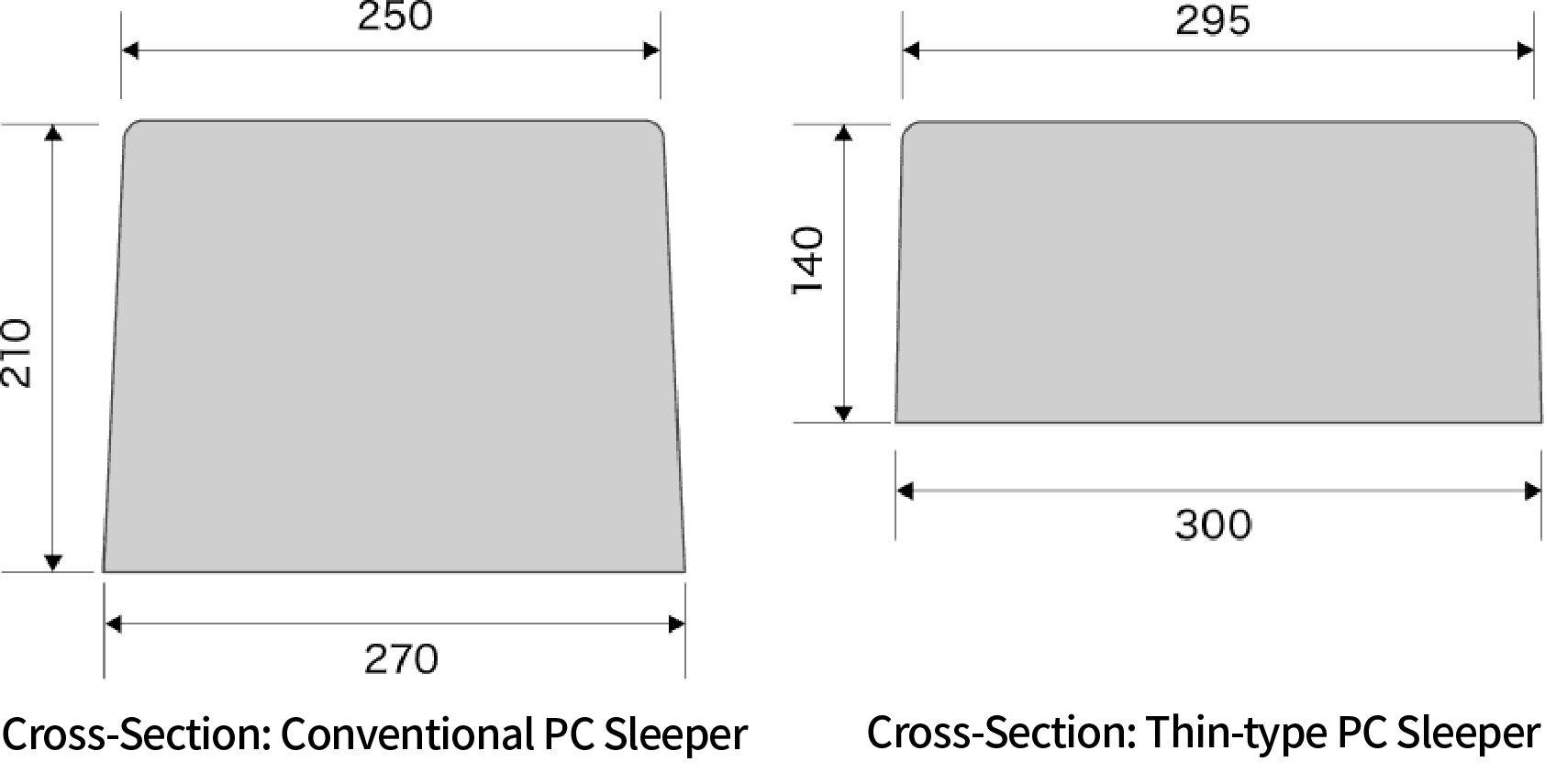
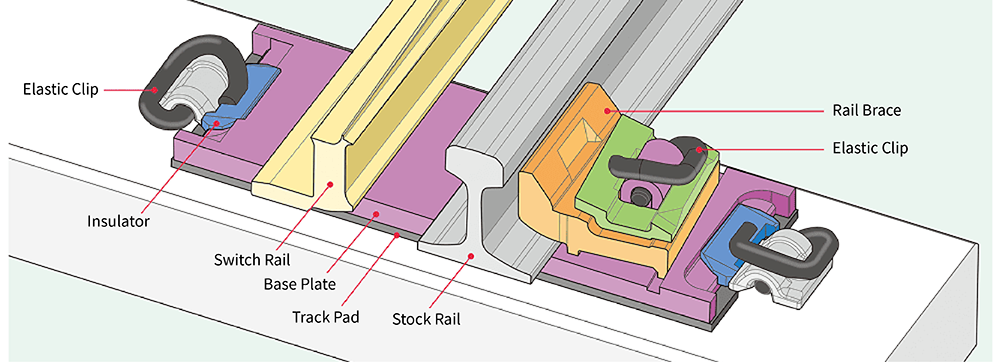
Table 1: Types of PC Sleepers for Switch Sections (Example)
| Sleeper Type | Length (mm) | Weight (kg) | |
| Conventional | Thin-Type | ||
| 3300M | 3,300 | Approx.430* | Approx.340* |
| 2300 | 2,300 | Approx.310 | Approx.250 |
| 2200 | 2,200 | Approx.290 | Approx.230 |
*The weight of Monoblock-type sleeper
Performance Benefits
Compared to timber sleepers, deviations in alignment and level are reduced by approximately 50%, resulting in longer maintenance intervals.
Table 2: Average Deviation Progression
| Timber | PC | PC/Timber(mm/year) | ||
|---|---|---|---|---|
| Alignment Deviation | Main Line Side | 0.88 | 0.52 | 0.59 |
| Branch Line Side | 1.61 | 0.56 | 0.35 | |
| Vertical Deviation | Main Line Side | 2.49 | 1.01 | 0.41 |
| Branch Line Side | 3.18 | 0.69 | 0.22 | |
| Average | 2.04 | 0.70 | 0.34 |
Source: Shin Senro (New Railway) Vol. 56, No. 4 (April 2002) – "The Outcome of Converting to PC Sleepers in Turnouts"
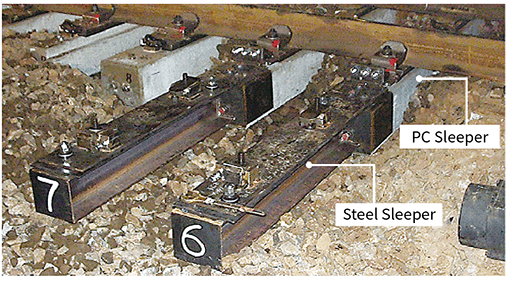
Joint-Type PC Sleeper (Motor Section)
Patents
- Patent Publication 2005-240415: Fastening Structure for Bearers
- Patent Publication 2005-264677: Connected Sleepers
- Patent Publication 2018-76673: Method for Installing Replacement Concrete Sleepers and Replacement Concrete Sleepers
- Utility Model Application 2021-1799: Sleeper for Turnouts
Achievements
We started full-scale delivery from FY 2002
| PC Sleeper Turnout Achievements | ||
|---|---|---|
| Switch Section | Entire Turnout | |
| Cumulative (As of FY 2023) | 402units | 26units |
Construction Process (Reference)
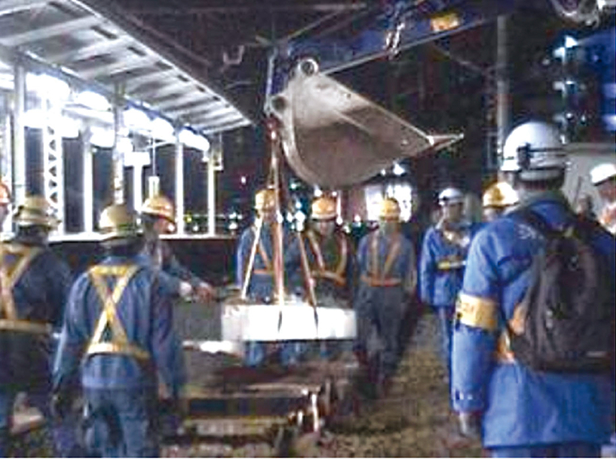
1. Loading sleepers onto the trolley
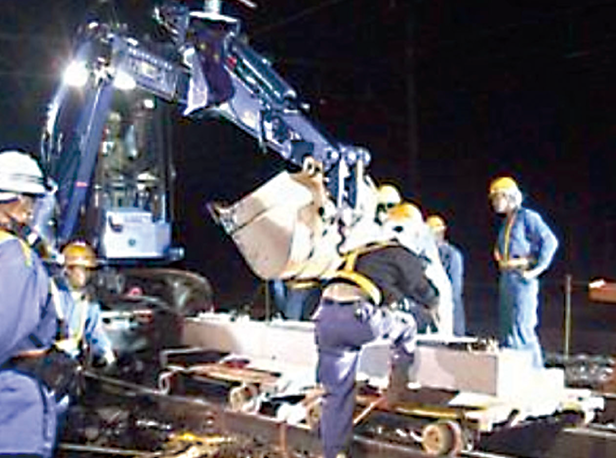
2. Trolley movement
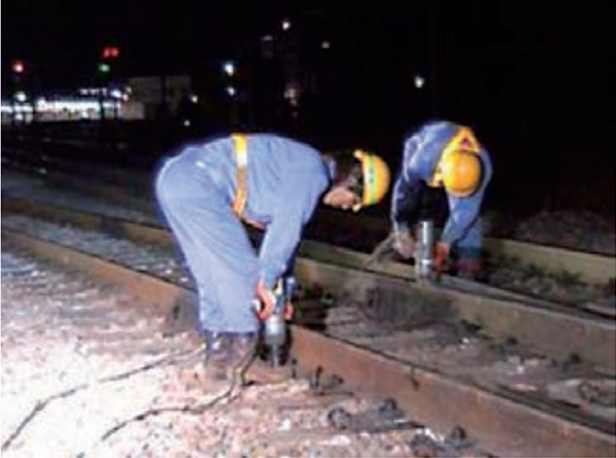
3. Loosening the fastening devices
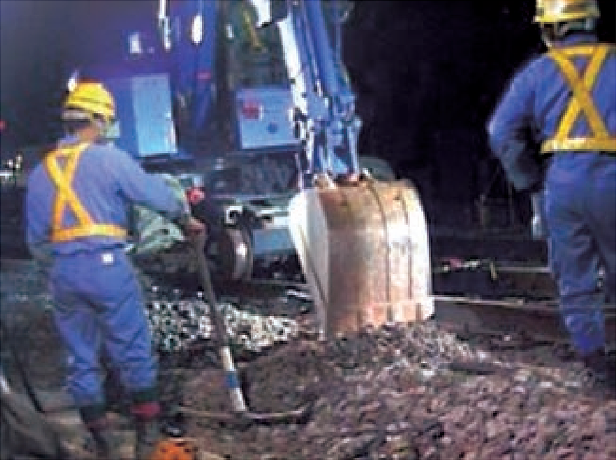
4. Excavating the ballast and removing old sleepers
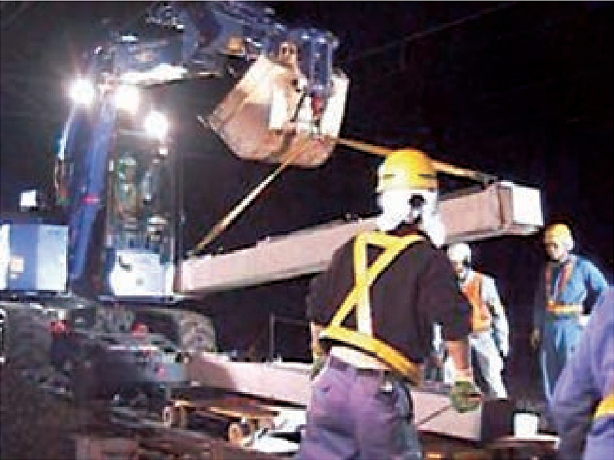
5. Lifting the sleepers
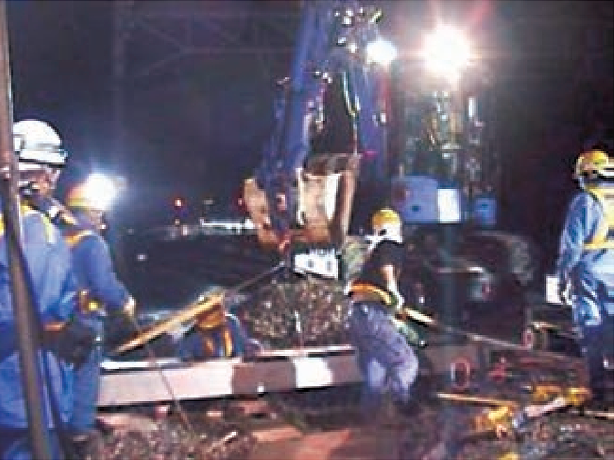
6. Inserting the sleepers
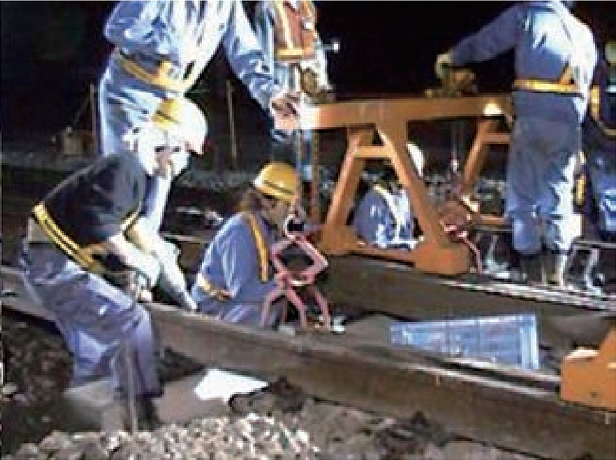
7. Adjusting the position of the sleepers
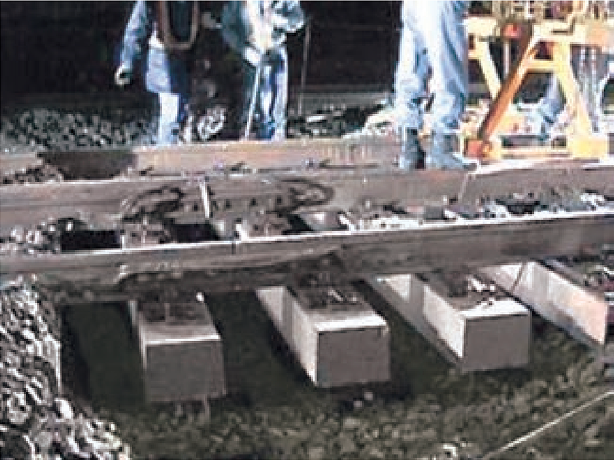
8. Adjustment completed
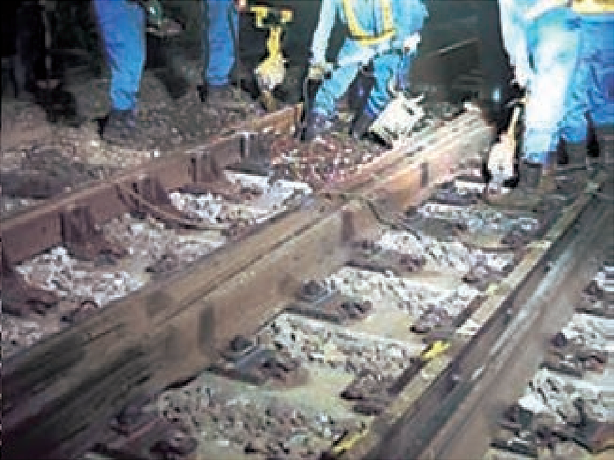
9. Ballast backfilling and TT tamping
- Turnout Installation: T60 Single 12-351 (60K12 High-Speed Turnout for Main Line)
- Number of Sleepers Adjusted: 35 sleepers
- Duration of Sleeper Adjustment: 7 days (average of 5 sleepers replaced per day)
- Time for Sleeper Adjustment: 2 hrs. 20 minutes to 3 hours
Provider of Construction Data: West Japan Railway Company (JR West)